


Look, I’m gonna be straight with you. After many years of doing this SEO thing for small businesses, I’m so tired of seeing the same advice everywhere. “Just create great content!” they say. “Write guest posts!” they chirp. Meanwhile, you’re sitting there watching your emails get ignored and your “amazing” blog posts get zero links.
I’ve been there. Hell, I’m still there some days. But here’s what I’ve actually learned works when you’re not some massive brand with a PR team and unlimited budget.
The stuff I’m about to share? This comes from real campaigns, real failures, and yeah… real successes too. Some of it might surprise you.
Comparison of backlinks acquisition strategies for small businesses showing effectiveness, ease of implementation, and speed of results

Why Most Small Businesses Suck at Link Building
Before we dive into what works, let’s talk about why you’re probably struggling. And trust me, it’s not because you’re doing anything wrong personally.
Small businesses get the worst advice. Every SEO guru out there is teaching tactics that work for big companies with dedicated teams and fat wallets. They tell you to “build relationships” and “create linkable assets” without explaining how the hell you’re supposed to do that when you’re already working 60-hour weeks just keeping your business running.
Plus, most of the “expert” advice comes from people who’ve never actually had to pitch a guest post to 50 blogs only to get 2 responses. They don’t know what it’s like to spend three months creating an “amazing” piece of content that gets shared exactly zero times.
Here’s the reality: You need tactics that work fast, don’t cost a fortune, and actually get responses. Everything else is just noise.
The Competition Hack That Changed Everything for Me
This is gonna sound almost too simple, but hear me out. About three years ago, I was beating my head against the wall trying to find link opportunities for a client’s outdoor gear shop. We’d tried everything – guest posts, directory submissions, the whole nine yards. Nothing was working.
Then I got lazy. Instead of brainstorming new outreach targets, I just googled my client’s biggest competitor and started looking at who was linking to them. And holy crap… why hadn’t I done this before?
Here’s exactly what I do now:
Take your top 3 competitors and literally google their business name in quotes. Like “Mountain Peak Outfitters” or whatever. You’ll find mentions on blogs, directories, resource pages – basically everywhere they’ve gotten links.
But here’s the kicker – you don’t even need fancy tools for this. Everyone’s always pushing Ahrefs or SEMrush (which are great, don’t get me wrong), but Google will tell you most of what you need to know for free.
Try these searches:
- “competitor name”
- competitor.com (without the www)
- Their phone number in quotes
- Their exact address
I’ve built entire link building campaigns just from this approach. Because here’s the thing – these sites already link to businesses like yours. They GET your industry. They’ve already said yes to someone in your space. Getting them to say yes to you is 10x easier than cold outreach.
The Brand Mention Goldmine Everyone Ignores
OK, this one’s gonna make you want to smack yourself. How many times has someone mentioned your business online without actually linking to you? I’m betting it’s more than you think.
I had a client – local bakery – who was getting mentioned in foodie blogs pretty regularly. But guess what? Half those mentions were just text. No links. Just sitting there doing nothing for their SEO.
Setting this up takes like 10 minutes:
Google Alerts is your friend here. Set up alerts for:
- Your exact business name in quotes
- Your founder’s name if you’re known in your industry
- Your main products or services
- Even misspellings of your business name (seriously)
When you find unlinked mentions, don’t be that person who demands a link. Just reach out friendly-like: “Hey, thanks for mentioning us! If you want to link to our site so readers can learn more, here’s our URL…”
I’m getting about 30-40% conversion on these. Which is insane compared to cold outreach.
HARO: The Love-Hate Relationship That Works
OK, let’s talk about HARO (Help a Reporter Out). This platform is simultaneously the best and most frustrating thing in link building.
On one hand, when it works, it REALLY works. I’ve gotten links from Forbes, Entrepreneur, major industry publications. The kind of links that make your domain authority jump.
On the other hand, the rejection rate is brutal. You’ll write thoughtful responses and hear nothing back. You’ll see terrible quotes get picked over yours. It’s enough to make you want to quit.
But here’s what I’ve learned after thousands of HARO pitches:
- Don’t try to be clever. Just answer the damn question directly.
- Lead with your credentials in the first sentence.
- Give them something they can’t get from Google – personal experience, data from your business, specific examples.
- Follow up once if you don’t hear back. That’s it.
I spend maybe 20 minutes every morning going through HARO queries. Some days I respond to nothing. Other days I’ll fire off 3-4 responses. The key is consistency, not volume.
And hey, HARO came back in 2025 after some drama, so now’s actually a great time to get back on it.
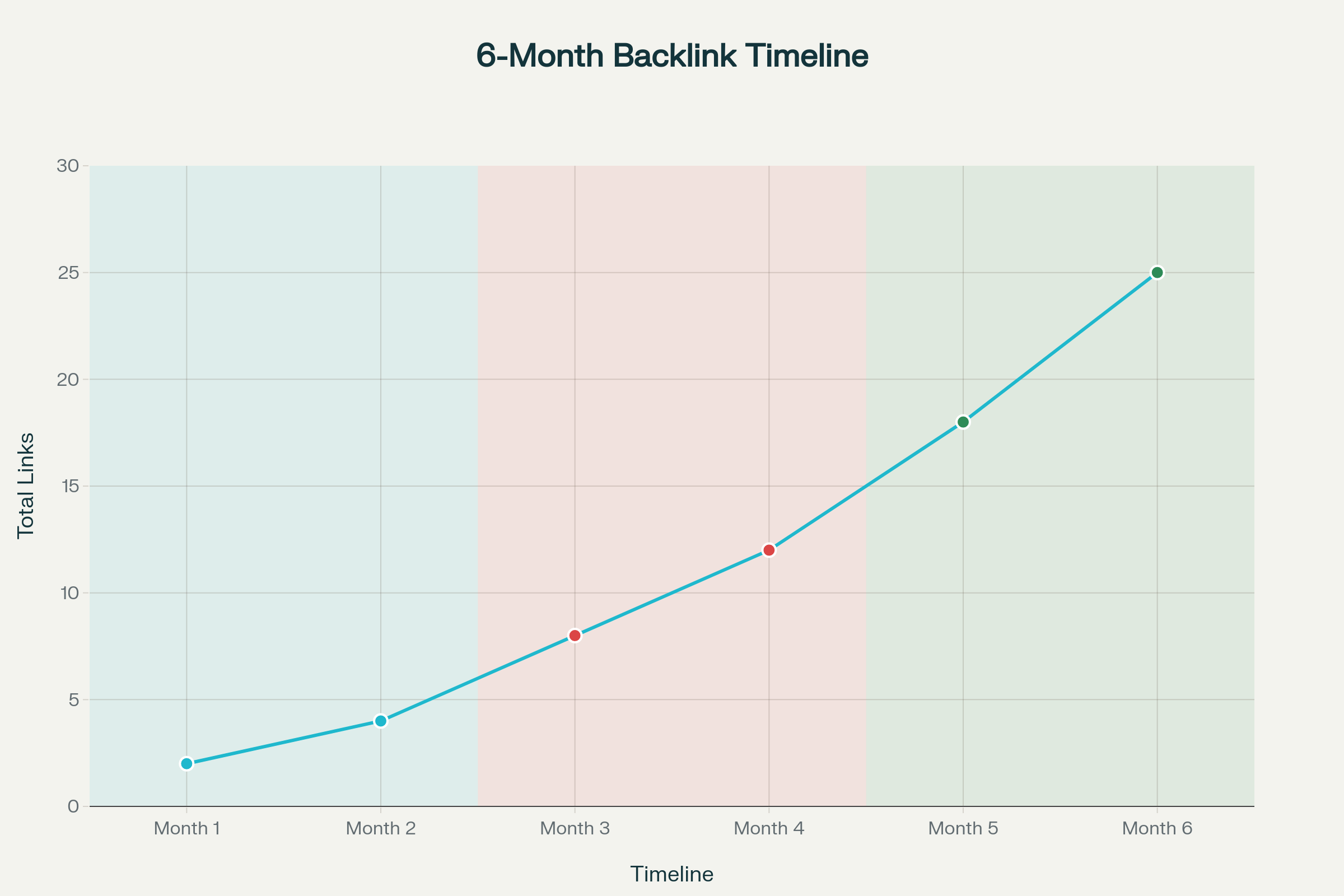
6-month backlinks building timeline showing realistic progression and key activities for small businesses
Creating Content That Actually Gets Links (Without Being Boring)
Ugh, “content marketing.” I hate that term because it’s been so watered down. But here’s the thing – some content genuinely does attract links. The trick is knowing what type.
Forget about writing another “10 Tips” blog post. Nobody’s linking to that. You want content that makes people go “Holy shit, I need to save this.”
What actually works:
Original data. Even small stuff. I had a plumbing client survey 200 customers about their biggest plumbing fears. Turned it into a simple report. Got links from 12 different home improvement sites.
Tools and calculators. They don’t have to be fancy. I made a “Cost Per Lead Calculator” for a marketing client using a simple online calculator builder. Still getting links two years later.
Industry surveys. Email your customer list. Ask them 10 questions. Boom, you’ve got data nobody else has.
The secret sauce? Make it visual. Nobody wants to read a 50-page PDF, but they’ll share an infographic all day long.
Link Exchanges: Yeah, They Still Work (When Done Right)
Before you roll your eyes – I know, I know. “Link exchanges are dead,” everyone says. Except… they’re not. They’re just doing them wrong.
The old-school “I’ll link to you if you link to me” thing? Yeah, that’s dead. Google’s not stupid.
But three-way exchanges? Partner networks? That’s different. Here’s what I mean:
Let’s say you sell wedding dresses. You partner with a wedding photographer and a wedding planner. The photographer links to the planner, the planner links to you, you link to the photographer. Natural, helpful, and it actually serves users.
I’ve got a whole network of complementary businesses doing this. Nobody’s linking directly back to each other, but we’re all helping each other out. It’s like… actual business networking, but online.
The Local Advantage Most People Waste
Small businesses have one huge advantage over big corporations: you’re actually part of your community. Use that.
I can’t tell you how many clients come to me having never contacted their local chamber of commerce, never sponsored a Little League team, never participated in community events. Meanwhile, they’re trying to get links from national publications that don’t know they exist.
Start local, get specific:
- Sponsor something. Anything. Even if it’s just $200 for a high school fundraiser.
- Join local business associations.
- Speak at community colleges or trade schools.
- Participate in charity events.
- Get quoted in local news (way easier than national media).
These links might not have the highest domain authority, but they’re relevant, they send real traffic, and Google loves local relevance.
What to Expect (The Truth About Timelines)
Let me be real about timelines because most people set crazy expectations.
Month 1-2: You’re gonna feel like nothing’s happening. You’re setting up systems, doing research, maybe getting 2-4 links if you’re lucky. This is normal. Don’t panic.
Month 3-4: Things start clicking. Your HARO responses are getting picked up. Guest posts are getting published. You might hit 8-12 new links per month. This is where it gets fun.
Month 5-6: If you’ve stuck with it, you’re probably seeing 15-25 links monthly. Your processes are smooth, relationships are building, content is getting shared naturally.
But here’s the thing – it’s not linear. Some months you’ll get 30 links. Other months you’ll get 3. That’s just how this game works.
Tools You Actually Need (Spoiler: Not Many)
Everyone’s trying to sell you expensive tools. Most of them you don’t need.
Free stuff that actually works:
- Google Search Console (see who’s linking to you)
- Google Alerts (brand mentions)
- HARO (media opportunities)
- Ahrefs free backlinks checker (100 links per domain)
- Google (seriously, for competitor research)
Paid tools worth considering:
- Ahrefs or SEMrush (pick one, not both)
- BuzzStream or similar for outreach management
- Canva Pro for quick graphics
That’s it. I’ve built million-dollar businesses’ backlinks profiles with less.
When to Quit (And When to Double Down)
Look, not every tactic works for every business. If you’ve been doing guest outreach for 3 months and getting zero responses, maybe it’s not your thing. That’s OK.
But if you’re getting some traction – even small wins – stick with it. I’ve seen businesses give up right before things started working.
Good signs to keep going:
- Getting any responses to outreach (even rejections)
- Content getting some shares or comments
- Brand mentions starting to increase
- Local connections responding positively
Red flags to pivot:
- Zero responses after 100+ outreach emails
- Your content gets literally no engagement
- You’re spending more time on link building than running your business
The Bottom Line
Here’s what nobody tells you about link building: it’s mostly boring, repetitive work. It’s not sexy. It’s not some secret hack. It’s just showing up every day and doing the work.
But when it works? it really works. I’ve seen small businesses double their organic traffic in 6 months just from consistent link building.
The strategies I’ve shared here aren’t revolutionary. They’re just… effective. And they work for real businesses with real constraints.
Start with competitor research and brand mention monitoring. Those are quick wins. Then layer in HARO if you can commit to it daily. Add content creation when you have bandwidth.
And remember – you’re not competing with Fortune 500 companies. You’re competing with other small businesses who are probably doing even less than you are.
Just don’t expect overnight miracles. This stuff takes time. But if you stick with it, six months from now you’ll be wondering why you didn’t start sooner.


